
Your Breakup Story Might Be Keeping You Stuck
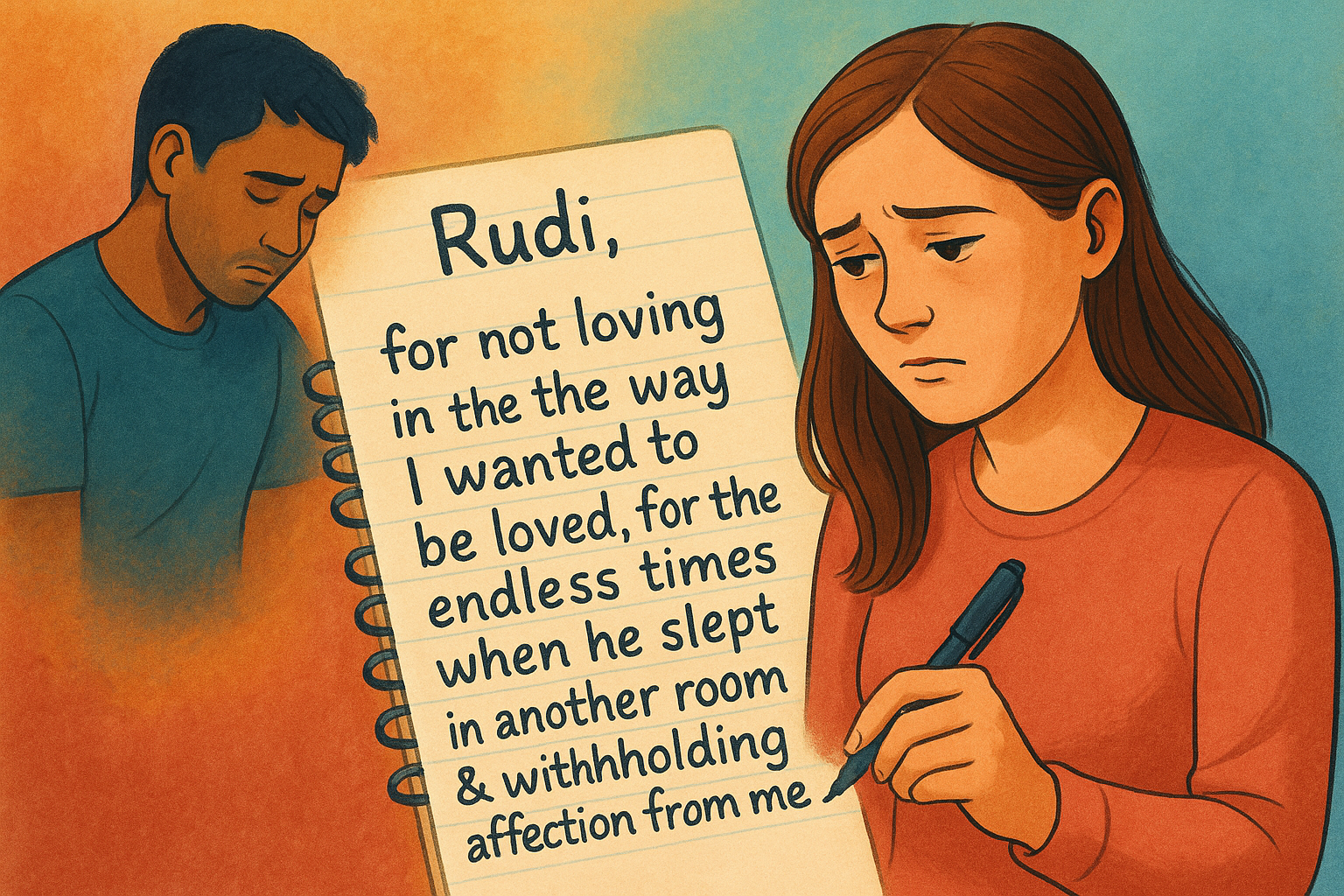
The Story You Tell About Your Breakup Matters More Than You Think
After a relationship ends, you instinctively reach for a story. You need to make sense of what happened. To explain why it fell apart, who was at fault, what it all means.
This story (what psychologists call a "breakup narrative") becomes the lens through which you see everything. Your past. Your future. Yourself.
But here's the uncomfortable truth: that story can either free you or trap you. It can support your growth or keep you locked in the same patterns. Most people don't realize which one they're doing.
What a Breakup Narrative Really Is
A breakup narrative is the story you tell yourself and others about why a relationship ended. It answers questions like:
What went wrong?
Who was responsible?
What were the turning points?
What does this mean about me, about them, about relationships?
These narratives aren't just factual accounts. They're meaning-making frameworks. They help you organize overwhelming emotions into something manageable. They're drawn from your attachment history, cultural scripts about love and loss, and your drive to protect your sense of self.
Everyone creates one. The question is whether yours serves you or limits you.
When Your Narrative Helps You Grow
It Creates Order from Chaos
When you can tell a coherent story about what happened, you shift from fragmentation to integration. From "I don't understand anything" to "Here's what I think occurred."
This coherence-making is foundational to psychological health. Attachment research shows that people who've healed from difficult experiences can narrate them with both honesty and perspective. Not minimizing. Not drowning in details. Just clear.
It Gives You Back Your Power
A well-constructed narrative restores agency. When you can identify what you contributed, what you learned, and how you might approach things differently, you shift from victim to participant.
This isn't about self-blame. It's about recognizing that in every relationship, both people contribute to the patterns. Even if you contributed very different things. Identifying your part gives you something you can actually work with.
It Helps You Extract Meaning
When you can say "That relationship taught me I need to speak up about my needs earlier" or "I learned I tend to lose myself and need stronger boundaries," you're using the narrative for growth.
The breakup becomes not just a painful ending but a chapter in your evolution.
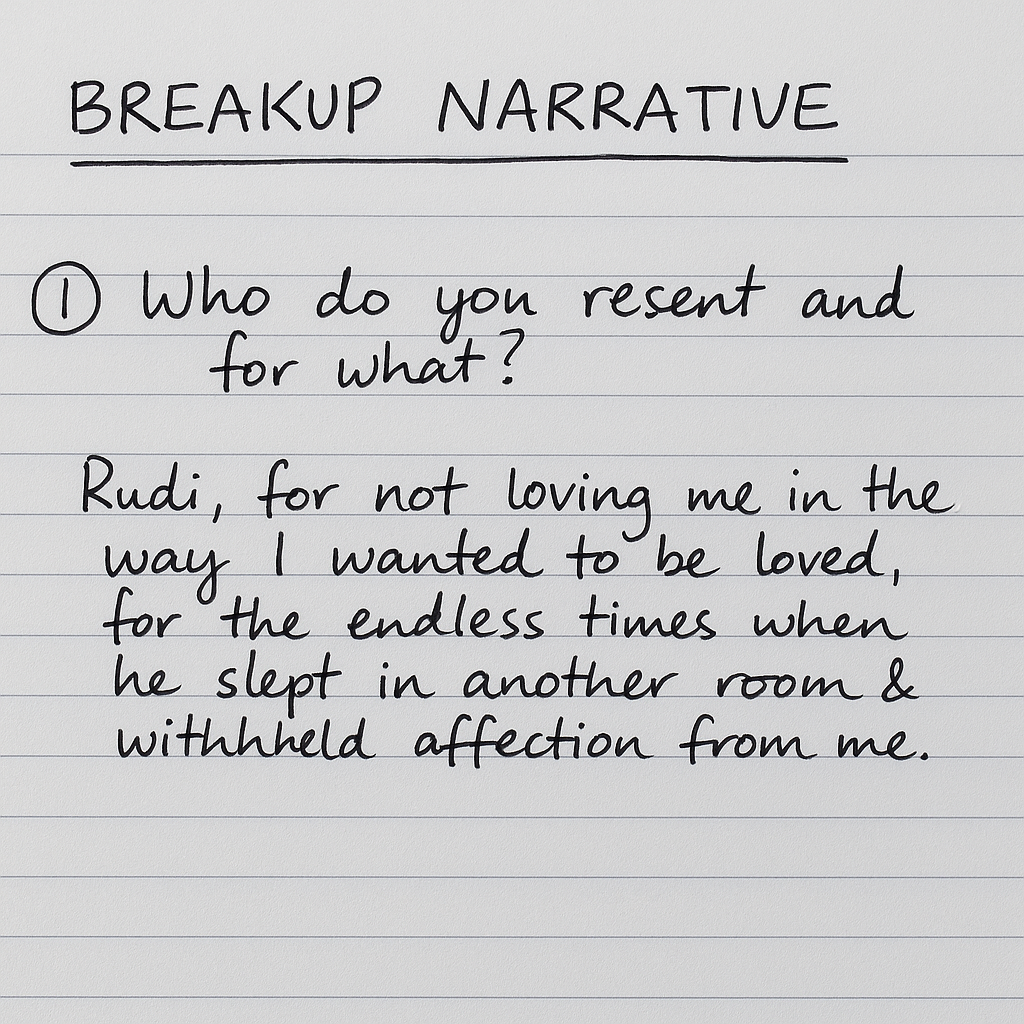
When Your Narrative Keeps You Trapped
You Rush to Closure Too Fast
One of the biggest traps is constructing a story too quickly. Before you've actually felt the loss in your body. Before you've processed the grief.
When you rush to "make sense" of what happened, you create a story that protects you from feeling. You wrap everything in a neat package. But unprocessed material doesn't disappear. It shows up later, in your body, in your next relationship, in anxiety you can't explain.
Your Story is Defensive
Some narratives function mainly to protect your ego. They keep you from real learning. Common patterns:
The Villain/Victim Split: "They were completely wrong and I was innocent." This protects your self-esteem but prevents you from seeing your own patterns.
The Dismissive Story: "It wasn't that important anyway." This avoidant strategy minimizes what you actually felt.
The Self-Annihilating Story: "I ruined everything" or "I'm unlovable." This turns all blame inward in ways that feel profound but actually keep you stuck.
These fixed narratives prevent you from stepping back and examining your experience with distance. When you're fused with your story, you can't learn from it.
You Ignore Other Perspectives
Every relationship has at least two people, which means at least two different perspectives. Your ex is likely constructing their own narrative, and it probably differs dramatically from yours.
Research on breakups shows that partners often operate from entirely different timelines. One person may date the relationship's decline to years earlier. The other pinpoints a recent conflict. Both are telling their truth. Neither captures the full picture.
The challenge is holding space for multiple truths without insisting yours is the only valid one.
Your Story Scripts Your Future
Perhaps the most dangerous pattern is when your narrative becomes so rigid it scripts future relationships.
If your story concludes "people always leave" or "I can't trust anyone" or "relationships require giving up who I am," you'll likely recreate dynamics that confirm these beliefs.
You arrange your relational world to match your internal models. Not because you're doomed. Because your narrative shapes your choices and behaviours.
How to Work with Your Narrative in Healthier Ways
Hold Your Story Lightly
The key is maintaining what Buddhism calls "don't-know mind." An openness to not having the definitive story.
You can have your version while recognising it's not the only version. And it will likely change as you gain distance.
Try phrases like "Right now, my sense is..." or "The way I'm understanding it at this point..." This preserves flexibility. You're taking a position without being tyrannised by it.
Feel Before You Explain
Before rushing to narrative, spend time with the bodily experience of loss. What sensations are present? Where do you feel the grief, the anger, the confusion?
This somatic processing isn't opposed to making sense of things. It enriches it. When your story emerges from embodied experience rather than defensive thinking, it's grounded in truth.
Look for Your Patterns
Use your narrative as a starting point for genuine inquiry, not an endpoint.
What patterns recur across your relationships? What attachment strategies show up? Where do you lose yourself or become reactive?
This adds developmental depth to simplistic blame stories.
Get Reality-Tested
Share your narrative with people who know you well enough to gently challenge it.
A good therapist or coach can help you notice where your story might be defensive or incomplete. This isn't about others telling you what "really" happened. It's about using relationship to gain perspective on your own meaning-making.
Expect Your Story to Evolve
Recognise that your narrative will change over time. That's healthy.
What you understand six months after a breakup will differ from what you see three years later. New relationships and experiences give you perspective.
The goal isn't finding the "true" story. It's working with your narrative in ways that support ongoing growth.
The Question That Matters Most
Ask yourself: Does this story expand my capacity or contract it?
Does it help me become more relational, more aware, more capable of intimacy? Or does it close me down, reinforce defenses, make me less available for connection?
A generative narrative will:
Acknowledge complexity and multiple perspectives
Include your contribution without excessive self-blame
Extract learning while honoring the pain
Remain open to revision
Help you approach future relationships differently
A limiting narrative will:
Assign all blame to one party (including yourself)
Oversimplify complex dynamics
Arrive at cynical conclusions about relationships
Feel rigid and unchangeable
Script future relationships to repeat the past
Conclusion
Breakup narratives are inevitable. We're storytelling creatures who need meaning.
The question isn't whether to have a narrative. It's how to work with it. In ways that serve genuine growth, not defensive closure.
The most useful narratives are ones you hold lightly. Revise regularly. Use as starting points for inquiry rather than final answers.
They honour your experience while acknowledging your perspective's limitations. They extract learning without bypassing grief. They acknowledge complexity without drowning in it.
Your breakup narrative is a tool. Use it wisely in service of becoming more of who you're capable of being.