
Breakup Narrative Reflection Guide: How to Heal After a Long-Term Relationship Ends
Introduction
When a long-term relationship ends, it is not only the breakup that hurts, it is the collapse of the story you built around it. You are left with unanswered questions, emotional residue, and a disrupted sense of identity.
A breakup narrative is a powerful tool for making meaning after relational loss. Rather than retelling events, it helps you understand how you made sense of the relationship, how you navigated its challenges, and how you are growing now.
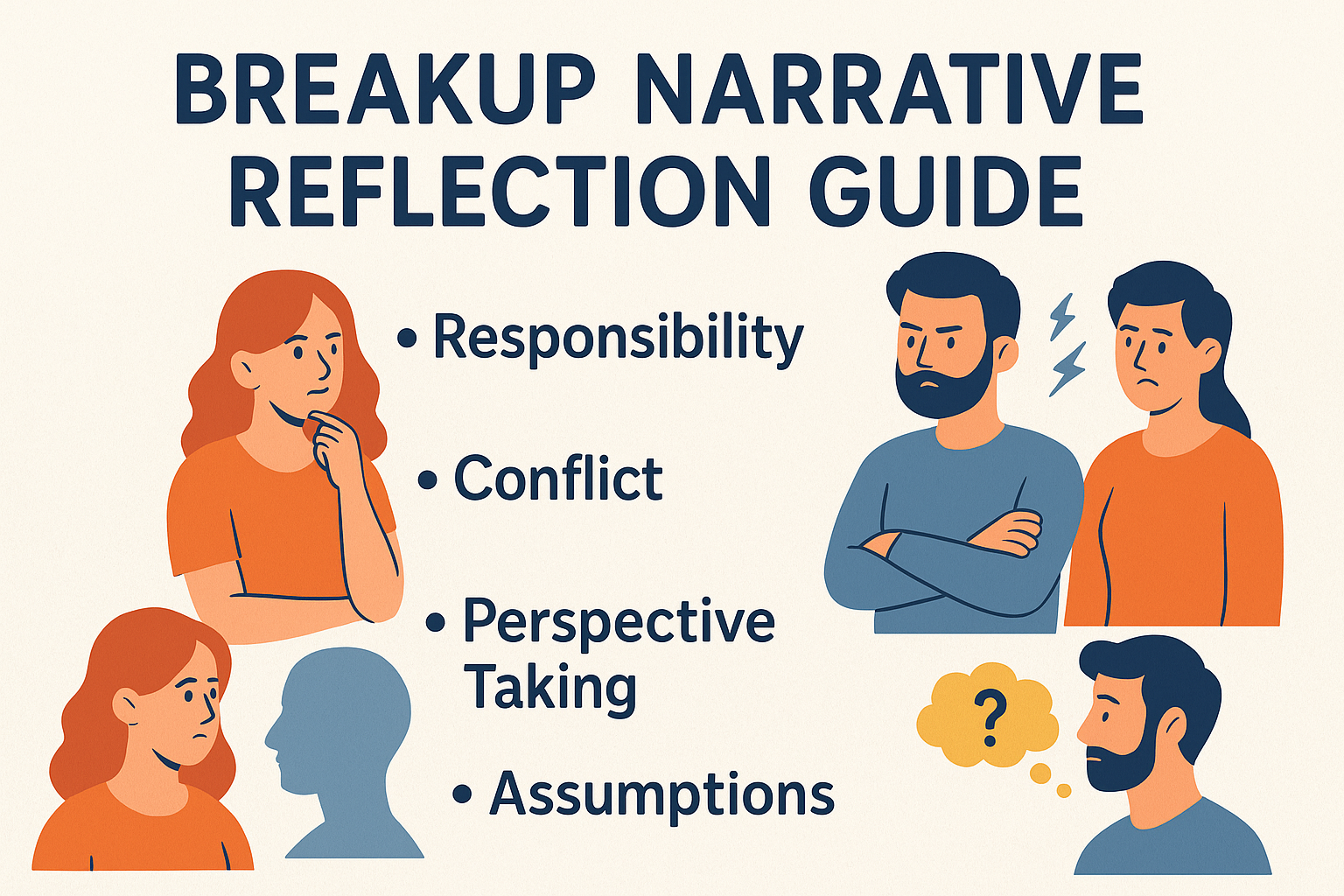
This Breakup Narrative Reflection Guide is based on the adult development work of Jennifer Garvey Berger. It offers a structured way to process your breakup by exploring four key areas of meaning making. These are responsibility, conflict, perspective taking, and assumptions.
This guide is not about blame. It is about integration, growth, and becoming more fully yourself.
What Is a Breakup Narrative
A breakup narrative is a reflective writing exercise focused on understanding the psychological and emotional patterns that shaped your relationship and its ending.
Rather than listing events, a breakup narrative asks:
What was happening inside you
How were you making sense of the world
What patterns or beliefs shaped your behaviour
This practice creates clarity, integration, and emotional closure even when external closure is not possible.
Why a Breakup Narrative Matters After a Long-Term Relationship Ends
Breakups activate:
grief
shame
confusion
longing
self protection
When we do not metabolise these emotions, we stay stuck in loops of:
rumination
resentment
self blame
avoidance
repetition of old patterns
A breakup narrative helps you shift
from:
"You do not understand me"
to:
"Here is how I was making meaning, and here is how I am growing now".
This shift is a core part of developmental growth.
1. Responsibility, What You Carried and What You Avoided
What it means:
Responsibility shows how you saw your role in the relationship.
Reflection Prompts
What did I take responsibility for
What did I believe was my job as a partner
What emotional labour was I performing
What did I avoid taking responsibility for
What did I blame myself for unfairly
Why it matters
Responsibility reveals themes of:
agency
boundaries
self worth
self protection
You are not writing to assign fault. You are writing to understand the patterns that shaped your choices.
2. Conflict, The Tensions Underneath the Fights
What it means:
Breakups rarely result from one argument. They emerge from recurring tensions.
Reflection Prompts
What were the central conflicts in our relationship
What needs or values were in tension
How did I show up during conflict
What did conflict threaten, my identity, safety, or belonging
What patterns repeated over time
Why it matters
Conflict reveals:
competing needs
emotional skill gaps
attachment dynamics
early conditioning
Understanding conflict helps you see what happened systemically, not personally.
3. Perspective Taking, Whose Eyes Could You See Through
What it means:
Perspective taking is one of the most powerful markers of adult development.
Reflection Prompts
Could I understand my own needs
Could I understand my partner’s experience
Whose perspective was I trapped inside
What perspectives became available only after the breakup
Why it matters
Limited perspective taking does not mean failure. It points to developmental edges you are now growing into.
4. Assumptions, The Invisible Rules Shaping Your Relationship
What it means:
Every relationship is governed by hidden beliefs.
Reflection Prompts
What did I believe about love, loyalty, or conflict
What did I believe about myself as a partner
Which beliefs limited my voice or choices
Which beliefs am I revising now
Examples
Love means sacrifice
If they loved me, they would just know
Conflict is dangerous
Why it matters
Naming assumptions helps you shift from automatic behaviour to conscious choice.
Putting It All Together, Integrating the Breakup Narrative
Once you have explored the four lenses, ask yourself:
Reflection Prompts
How was I making sense of my relationship
What skills or capacities do I have now that I did not then
What is the next growth edge for me
What commitments do I want to make to my future self
Why it matters
Integration turns a painful story into a coherent and compassionate narrative of development.
Quick Summary, Breakup Narrative Reflection Questions
Featured Snippet Ready
What was I responsible for, and what was not mine to carry
What were the core conflicts in the relationship
Whose perspective could I understand, and whose could I not
What assumptions shaped my behaviour
How am I growing or changing now
How to Start Writing Your Breakup Narrative, Simple Steps
Set aside 15 to 20 minutes in a quiet space
Start with, what happened from my point of view
Explore responsibility, conflict, perspective, and assumptions
Write without editing
Close with, what do I understand now that I did not then
This process is powerful because it activates:
self awareness
emotional regulation
cognitive integration
Conclusion
A breakup narrative does not erase pain, but it transforms it.
Rather than replaying events or collapsing into shame, you begin to see yourself as someone who was doing the best they could with the tools they had.
And now, you have more tools.
More perspective.
More awareness.
Breakups do not just end relationships.
They reveal where the next version of you is trying to emerge.
Healing becomes not a destination, but a process of becoming.
If you are ready to deepen this work, try one of these options:
Download a guided breakup narrative workbook
Join a reflective writing group
Explore somatic or IFS informed therapy
Work with me to integrate relational patterns and build a new foundation
You do not have to do this alone. Support is available.