
What is Coercive Control? Understanding the Hidden Pattern of Abuse
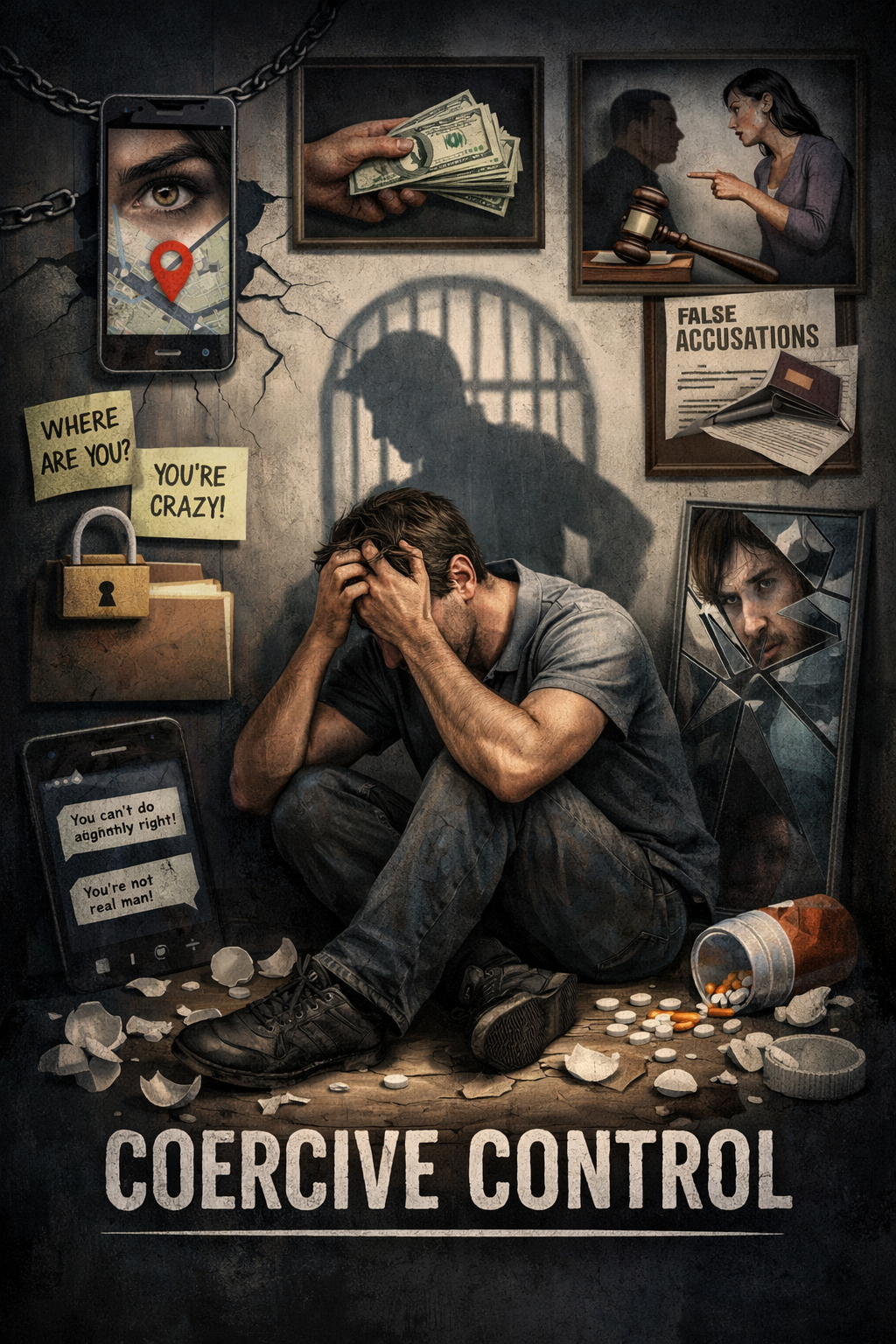
Introduction
If you're questioning whether what's happening in your relationship is abuse, you're probably thinking about physical violence. But what if there's no hitting, no visible bruises, yet you feel constantly controlled, monitored, and trapped? What if you're walking on eggshells, questioning your sanity, and have lost yourself in the relationship - yet you can't point to a single "abusive incident" that would make someone believe you?
You may be experiencing coercive control.
Coercive control is now recognised as one of the most damaging forms of domestic violence, yet it remains largely invisible to those who haven't experienced it. Research shows it causes severe psychological harm, comparable to or exceeding physical abuse - yet most people, including many professionals, still don't understand it. This post will explain exactly what coercive control is, how it works, why it's so hard to recognise, and why understanding it might be the key to making sense of your relationship.
What is Coercive Control?
Coercive control is a pattern of behaviors used to dominate, isolate, and entrap a partner, often without visible physical violence.
A Clear Definition
Coercive control is a pattern of behaviour used to dominate, intimidate, and isolate another person through tactics that create fear, dependence, and loss of autonomy. Unlike physical violence, which is episodic and visible, coercive control is ongoing, systematic, and often invisible to outsiders. The term was coined by Professor Evan Stark, who described it as "a liberty crime" rather than a physical assault. It's not about what happens in a single moment; it's about the cumulative effect of ongoing tactics that strip away your freedom, identity, and sense of self.
Key Signs of Coercive Control
Pattern, Not Incident
Coercive control isn't a one-time event or even periodic outbursts. It's a persistent pattern of behaviour designed to establish and maintain dominance. Individual tactics might seem small or explainable, but together they create a web of control.
Multiple Tactics Used Simultaneously
Perpetrators don't just use one form of control; they use many. Isolation, surveillance, financial control, degradation, threats, and manipulation work together to entrap the victim.
Purpose is Domination, Not Resolution
Normal relationship conflicts aim for resolution or understanding. Coercive control aims for submission and obedience. The goal is power and control, not solving problems.
Creates Fear and Entrapment
The cumulative effect creates chronic fear, hypervigilance, and a sense of being trapped. Victims feel they can't leave, can't fight back, and can't even clearly explain what's wrong.
Targets Identity and Autonomy
Unlike physical abuse, which targets the body, coercive control targets your sense of self, your autonomy, and your connection to reality. It erodes who you are at a fundamental level.
Examples of Coercive Control in Relationships
In Everyday Life
You stop seeing friends because it “causes conflict”
You check your phone constantly to avoid accusations
You explain your whereabouts in excessive detail
In Communication
Conversations turn into interrogations
You apologise just to end tension
Your reality is dismissed or rewritten
In Decision-Making
You avoid making decisions without approval
Financial choices are controlled or scrutinised
Your preferences are overridden
In Emotional Experience
You feel constantly on edge
You second-guess your own perception
You feel trapped but can’t explain why
If you recognise these patterns, you may want to explore:
→ 10 Signs of Coercive Control Against Men
→ When She Says You're the Abuser
How Coercive Control Differs from Physical Abuse
Many people, including police, courts, and domestic violence services, still equate domestic abuse with physical violence. But coercive control is fundamentally different in several critical ways.
Physical Abuse: Episodic and Visible
Physical abuse involves discrete incidents of violence: a punch, a shove, an assault. These incidents have clear beginnings and endings. They leave visible marks that can be photographed, documented, and shown to others. When someone says "my partner abuses me" and shows bruises, people believe them.
Physical abuse typically escalates during conflict or stress. It's often followed by a "honeymoon period" of remorse and promises to change. While devastating, physical violence has clear boundaries: it happened, or it didn't. You were hit, or you weren't.
Coercive Control: Ongoing and Invisible
Coercive control, in contrast, is constant and pervasive. It doesn't happen during fights;it IS the relationship. There may be no physical violence at all, yet the impact on victims' mental health is often more severe than physical abuse alone.
Research shows:
- Coercive control has stronger associations with PTSD (r = .32) and depression (r = .27) than physical violence
- Victims of coercive control without physical violence show comparable or worse mental health outcomes than victims of physical violence alone
- Nearly half of male victims of "intimate terrorism" (severe coercive control) exceed clinical cutoffs for PTSD
- Three-quarters exceed cutoffs for depression The tactics leave no bruises. Isolation, monitoring, financial control, gaslighting, degradation; none of these show up in photographs. This makes coercive control incredibly difficult to prove, especially for male victims who face systemic disbelief.
Why Understanding This Distinction Matters
If you're experiencing coercive control, you might minimize it because "at least there's no violence." You might think "other people have it worse" or "I'm overreacting because she hasn't hit me."
This is exactly what perpetrators exploit. The absence of physical violence makes the abuse invisible to others and confusing to you. But the research is clear: coercive control causes severe, documented harm. It's not "less than" physical abuse - it's a different form that can be equally or more damaging.
Understanding this can be the difference between thinking "we just have a difficult relationship" and recognising "I'm being systematically controlled and abused."
The Tactics: What Coercive Control Actually Looks Like
Coercive control uses multiple tactics simultaneously. Here are the most common forms research has identified:
Isolation
What it is: Systematically cutting you off from friends, family, and support networks.
What it looks like:
- Criticising your friends or family until you stop seeing them
- Creating drama or conflict before social events so you cancel
- Moving you away from your support network
- Monitoring or controlling who you contact
- Sulking, punishing, or threatening when you spend time with others
- Making it so difficult to maintain relationships that people give up on you
Impact: You become dependent on her for emotional and social support, making it harder to leave or get perspective on the relationship.
Monitoring and Surveillance
What it is: Constantly tracking your location, communications, activities, and behaviour.
What it looks like:
- Demanding to know where you are at all times
- Checking your phone, emails, texts, social media
- Installing tracking apps or spyware on your devices - Following you or having others watch you
- Interrogating you about your day with excessive detail
- Requiring you to send photos or check-in constantly
Impact: No privacy, constant hypervigilance, feeling like you're always being watched. This creates chronic anxiety and restricts your freedom.
Gaslighting
What it is: Manipulating you into questioning your own memory, perceptions, and sanity.
What it looks like:
- Denying events that you clearly remember: "That never happened"
- Rewriting history: "You're remembering it wrong"
- Telling you you're "crazy," "too sensitive," or "overreacting"
- Insisting their version of reality is correct when you know it isn't
- Making you doubt your own judgment and perceptions
Impact: Loss of self-trust, constant self-doubt, feeling like you're losing your mind. Gaslighting is particularly effective against men who are socialised to be logical and rational - when she tells you you're being irrational, it cuts deep.
Financial Control
What it is: Controlling access to money and economic resources to create dependence.
What it looks like:
- Controlling all finances even if you earn the money
- Requiring you to ask permission for purchases
- Monitoring and interrogating about all spending
- Running up debt in your name
- Sabotaging your work or employment
- Refusing to contribute while demanding you provide
Impact: Economic dependence makes leaving extremely difficult. Even if you're the primary earner, financial control traps you.
Control Over Daily Activities
What it is: Dictating what you can wear, eat, do, where you can go, how you spend your time.
What it looks like:
- Controlling your appearance (clothes, hair, grooming)
- Dictating what you eat or when you sleep
- Restricting your access to transportation
- Controlling whether you can work, study, or pursue hobbies
- Micromanaging your schedule and activities
Impact: Gradual erosion of autonomy. What starts as "suggestions" becomes rigid rules enforced through punishment, sulking, or rage.
Threats and Intimidation
What it is: Creating fear through threats of harm, consequences, or punishment.
What it looks like:
- Threatening to leave or take the children
- Threatening to harm herself, you, or others
- Threatening to make false allegations (rape, assault, child abuse)
- Threatening to ruin your reputation or career
- Threatening to destroy property or harm pets
- Legal threats (reporting to police, CPS, immigration)
Impact: Chronic fear keeps you compliant. The threats don't need to be carried out—the fear of them is enough to control behaviour. For men, threats of false allegations are particularly terrifying because they often work (gender bias in systems means men are more likely to be believed as perpetrators).
Degradation and Humiliation
What it is: Systematic attacks on your dignity, worth, and identity.
What it looks like:
- Name-calling, insults, put-downs (especially in front of others)
- Belittling your achievements, interests, or abilities
- Sexual humiliation or degradation
- Treating you as less than human
- Public humiliation or embarrassment
Impact: Destroys self-esteem and sense of worth. Over time, you internalise the degradation and believe you deserve the treatment.
Emasculation (Specific to Male Victims)
What it is: Weaponising masculine norms to shame and control men.
What it looks like:
- "You're not a real man"
- Questioning your masculinity or manhood
- Sexual humiliation related to "being a man"
- Comparing you unfavorably to other men
- Exploiting provider/protector expectations
Impact: Research identifies "crisis of masculinity" as a central experience for male victims. Perpetrators weaponise hegemonic masculine ideals ("men should be strong, protectors, unemotional") to shame men into compliance and silence.
Why It's So Hard to Recognise (Especially for Men)
If coercive control causes such severe harm, why don't victims recognize it and leave? Several factors make recognition extremely difficult, and male victims face unique additional barriers.
It Develops Gradually
Coercive control doesn't start with obvious abuse. It begins with behaviors that seem like love or care:
- "She just wants to spend time with me" (isolation beginning)
- "She's interested in my day" (surveillance beginning)
- "She's helping me with money" (financial control beginning) The escalation is gradual. Each boundary crossed is slightly worse than the last. You adapt and normalise incrementally, never noticing how restricted you've become until you're deeply trapped.
There's No Single "Abusive Incident"
When people ask "What did she do?" you struggle to explain. Nothing sounds that bad in isolation:
- "She checks my phone sometimes"
- "She doesn't like my friends much"
- "She handles the finances" But it's the pattern, not the incidents that creates the abuse. Trying to explain coercive control is like trying to describe being slowly suffocated - each breath being restricted is small, but the cumulative effect is deadly.
She Blurs the Lines Deliberately
Perpetrators actively create confusion:
- "We both have issues" (false equivalence)
- "All couples fight" (normalising)
- "I only did that because you..." (making her behavior your fault)
- Periods of kindness between control (intermittent reinforcement)
- "You're the one being controlling" (DARVO: Deny, Attack, Reverse Victim/Offender).
These tactics keep you focused on fixing yourself rather than seeing her pattern.
Masculine Norms Create Self-Doubt
Men face unique barriers to recognising victimisation:
1. Belief that men can't be abused
Cultural narratives frame men as perpetrators, women as victims. Many men genuinely don't know male victimisation is possible.
2. Shame about not being "strong".
Men are socialised to be protectors and providers. Being controlled by a woman violates masculine norms, creating profound shame.
3. Fear of not being believed.
This fear is justified by reality. Research consistently shows male victims face higher rates of:
- Disbelief from police and courts
- Being arrested when they're the victim
- Losing custody based on false allegations
- Being turned away from domestic violence services
4. Provider/protector expectations.
Men often believe they should "handle" problems themselves. Seeking help feels like admitting failure.
5. Concern about children
If you have children, the threat of losing custody is extremely effective. Many men stay in abusive relationships primarily to protect their children's access to them.
Love and Abuse Coexist
Perhaps the most confusing aspect: you genuinely love her. There are good moments, good days, even good weeks. She meets some of your needs (companionship, family, stability) even while harming you.
Trauma bonding, the cycle of abuse followed by kindness , creates powerful attachment. Your brain becomes addicted to the relief when things are "good again," making it incredibly hard to leave.
The presence of love doesn't mean abuse isn't happening. The two coexist, which is profoundly disorienting.
The Impact: Why Coercive Control Is So Damaging
Research documents the severe harm caused by coercive control:
Mental Health
- PTSD: Meta-analyses show moderate associations (r = .32)
- Depression: Significant correlation (r = .27)
- Anxiety: Increased prevalence of anxiety disorders
- Suicidality: Elevated risk of suicidal thoughts and attempts
Among male victims specifically:
- 47% exceed clinical cutoff for PTSD
- 74% exceed clinical cutoff for depression
These rates are comparable to or exceed combat veterans in some studies.
Physical Health
Chronic stress from coercive control affects physical health:
- Cardiovascular disease
- Chronic pain and illness
- Sleep disruption
- Weakened immune system
Loss of Identity and Autonomy
Victims report:
- Feeling like they've "lost themselves"
- No longer recognising who they've become
- Inability to make simple decisions
- Complete dependence on abuser for validation
Impact on Masculinity (Male Victims)
Research consistently identifies masculine identity crisis as central to male victims' experience:
- Feelings of being "less of a man" for being victimised
- Shame about not meeting gendered expectations
- Self-blame related to societal masculinity norms
- Internalised belief that "real men don't let women control them"
This identity damage is not a side effect; it's often an intentional goal of perpetrators who weaponise masculine norms to maintain control.
Social Consequences
- Isolation from friends and family
- Loss of employment or career damage
- Difficulties in future relationships
- Social stigma and disbelief
Long-term Effects
Even after leaving:
- PTSD symptoms persist
- Difficulty trusting others
- Ongoing self-doubt from gaslighting
- Hypervigilance and anxiety
- Challenges in establishing healthy relationships
The good news: healing is possible. With appropriate support, male victims do recover from coercive control. But first, you have to recognise what's happening.
How to Know If You're Experiencing Coercive Control
Ask yourself these questions. Be honest:
About Control and Autonomy:
- Can you make decisions about your life (work, friends, money) without her permission?
- Do you feel like you're walking on eggshells constantly?
- Are you afraid of her reaction if you disagree or set boundaries?
- Has your world gotten smaller—fewer friends, less activities, more restrictions?
About Monitoring:
- Does she track your location, check your phone, or demand constant updates?
- Do you feel watched or surveilled?
- Do you hide things from her to avoid interrogation?
About Your Reality:
- Do you question your own memory or sanity regularly?
- Does she deny things you clearly remember happening?
- Are you told you're "too sensitive" or "overreacting" when you're upset?
About Equality:
- Can both of you bring up problems, or only her?
- Are compromises actually compromises, or do you always give in?
- Does she do things she punishes you for doing?
About Impact:
- Are you depressed, anxious, or feeling hopeless?
- Have you lost yourself in this relationship?
- Do friends or family express concern about the relationship?
- Do you feel trapped—like you can't leave even though you're unhappy?
If you answered "yes" to many of these questions, especially about fear, lost autonomy, questioning your sanity, and feeling trapped, you're likely experiencing coercive control.
What to Do If You Recognise Coercive Control
First: Validate your reality. If this resonates, trust that instinct. You're not overreacting. You're not "too sensitive." Coercive control is real, documented abuse with severe consequences.
Immediate Steps
1. Talk to someone who will believe you
- Trusted friend or family member
- Male victim helpline: National DV Hotline (1-800-799-7233 serves all genders)
- Therapist experienced with male victims
2. Document the pattern
- Keep a journal (secure location) of incidents, dates, tactics
- Save threatening texts/emails
- Take photos of evidence
- Write down witnesses to incidents
3. Assess your safety
- Has there been physical violence or threats?
- Are children involved?
- Do you fear she'll escalate if you try to leave?
4. Don't confront her with this information.
- She will likely DARVO (Deny, Attack, Reverse Victim/Offender)
- Confrontation often escalates control, not reduces it
5. If there are children, consult a family law attorney
- Before making moves that affect custody
- Understand your rights and risks
6. Consider individual therapy
- With a trauma-informed therapist who understands male victimisation
- NOT couples counselling (she'll manipulate therapy)
Longer-term Considerations
You essentially have three paths:
Stay and Manage: Set boundaries where possible, build outside support, protect yourself financially/legally, work on healing while remaining. Risk: abuse continues.
Benefit: maintain children's daily life if relevant.
Try to Change the Dynamic: Set firm boundaries, require she get help, be willing to leave if she won't change.
Risk: she escalates.
Benefit: small chance of improvement if she's genuinely willing.
Leave: Safety plan, document everything, get legal counsel, execute separation.
Risk: danger peaks at leaving, custody battles.
Benefit: end of daily abuse, chance to heal.
There's no single "right" answer. Each man's situation is different.
Critical Reality Check
Coercive control typically doesn't get better on its own. Research shows:
- She won't change without consequences
- Love isn't enough to stop abuse
- Couples counselling often makes coercive control worse
Time doesn't heal it without intervention; this doesn't mean there's no hope, but hope requires recognising reality and taking appropriate action.
Resources and Support
If you're experiencing coercive control, you don't have to figure this out alone.
Crisis Support
- National Domestic Violence Hotline: 1-800-799-7233 (24/7, serves all genders)
- Crisis Text Line: Text HELLO to 741741
- Suicide Prevention Lifeline: 988
Male-Focused Support
- Mankind Initiative (AU):mankind.org.au
- Men'sLine Australia (AU):https://mensline.org.au/
- National Coalition for Men:ncfm.org
- 1in6 (male sexual abuse): 1in6.org
Professional Help
- Reclaim Men's Healing Program: Comprehensive, evidence-based healing program specifically for male survivors of coercive control
- Family law attorney: Consult before making major decisions if children are involved
- Trauma-informed therapist: Find someone who understands male victimisation
Further Reading
- "Coercive Control" by Evan Stark – The foundational academic text
- "The Body Keeps the Score" by Bessel van der Kolk – Understanding trauma's impact
- Download our free resources at Reclaim Men’s Healing Website.
Conclusion: Understanding Changes Everything
Coercive control is not about isolated incidents or occasional arguments. It's a systematic pattern of domination, intimidation, and control that creates fear, dependence, and loss of autonomy. It causes severe psychological harm—often exceeding physical abuse—yet remains largely invisible because the tactics leave no bruises.
For male victims, coercive control is particularly difficult to recognize and escape. Gender bias in systems, masculine norms that create shame, and perpetrators' weaponisation of these norms create profound barriers to help-seeking and healing.
But recognition is the first step. If this article resonated with you—if you saw your relationship in these descriptions—that recognition, as painful as it is, is the beginning of change.
You didn't cause this. You don't deserve this. And you have the right to live without fear, control, and domination.
Understanding what coercive control is can be the difference between thinking "we just have problems" and recognizing "I'm being systematically abused." That clarity, while devastating, is also empowering. Because you can't address a problem you can't name.
Ready to Take the Next Step?
If you're ready for support in understanding and healing from coercive control, Reclaim Men's Healing Program offers comprehensive, evidence-based healing specifically designed for male survivors. Our 1-week program integrates trauma-informed therapy, men's peer support groups, and direct work on the masculine identity challenges unique to male victims. Schedule a free discovery call to learn more →
Internal Links:
- Coercive Control vs. Arguments: What's the Difference?
- 10 Signs of Coercive Control Against Men
- When She Says You're the Abuser: Navigating False Allegations